
Solar Shades vs Blackout Shades: Which One Is Right for Your Home?
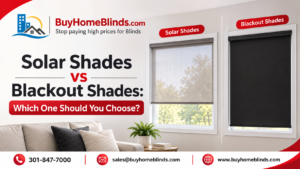
Not every room needs the same kind of window covering. A living room may need natural daylight without harsh glare, while a bedroom may need much stronger light control.
That is why homeowners comparing solar shades vs blackout shades should understand how these two products work before making a purchase.
Both can improve the comfort and appearance of a room, but they solve different problems.
What Are Solar Shades?
Solar shades are designed to reduce glare and help manage sunlight while maintaining some visibility to the outdoors, depending on fabric openness and color.
They are useful for:
-
Living rooms with bright windows.
-
Home offices where sunlight reflects on computer screens.
-
Sunrooms and large picture windows.
-
Rooms where you want daylight without direct glare.
Explore solar shades for different fabric and light-control options.
What Are Blackout Shades?
Blackout shades use opaque or specially designed fabrics to block most incoming light when properly installed. They are often selected for bedrooms, media rooms and spaces where darkness is important.
They can be useful for:
-
Bedrooms and nurseries.
-
Shift workers who sleep during the day.
-
Home theaters.
-
Rooms with strong morning or afternoon sunlight.
Explore room-darkening shades for available options.
Solar Shades vs Blackout Shades: Main Differences
| Feature | Solar Shades | Blackout Shades |
|---|---|---|
| Main purpose | Glare and sunlight control | Strong light reduction |
| Outdoor visibility | Usually maintained to some degree | Usually very limited |
| Daylight | Allows filtered daylight | Blocks most incoming light |
| Best rooms | Offices, living rooms, sunrooms | Bedrooms, media rooms |
| UV protection | Helps reduce UV exposure depending on fabric | Depends on fabric and construction |
| Privacy at night | Depends on lighting and fabric | Generally stronger, but edge gaps matter |
Which Shades Are Better for Privacy?
This is an important difference. Solar shades are not automatically private at night. When the lights are on indoors and it is dark outside, people may be able to see into the room depending on the fabric and lighting conditions.
Blackout shades generally provide greater privacy when fully closed, although installation gaps can still matter.
For street-facing windows in Maryland, DC or Northern Virginia, consider how close neighboring homes are and whether you need daytime privacy, nighttime privacy or both.
Which Shades Are Better for Home Offices?
Solar shades are often a practical choice for home offices because they can reduce glare while preserving a view outside.
If your main concern is screen reflections, a solar shade with an appropriate openness factor may be more useful than a blackout shade.
Which Shades Are Better for Bedrooms?
Blackout shades are often the better starting point for bedrooms, particularly when early morning sunlight affects sleep.
If you want some daylight during the day, you can choose a different light-filtering product for another room rather than using one style throughout the entire home.
Can You Combine Solar Shades and Drapes?
Yes. Layering a solar shade with decorative drapery can give you flexible light control and a softer appearance.
BuyHomeBlinds also offers custom drapery panels that can complement window shades.
Frequently Asked Questions
1. Are solar shades the same as blackout shades?
No. Solar shades filter sunlight and reduce glare while often maintaining outdoor visibility. Blackout shades are designed to block most incoming light.
2. Can people see through solar shades at night?
They may be able to, especially when indoor lights are on. Nighttime privacy depends on fabric openness and the difference between indoor and outdoor lighting.
3. Are blackout shades completely lightproof?
Not always. Light can enter around the edges, depending on mounting style and product design.
4. Are solar shades good for large windows?
Yes. They are commonly considered for large windows where glare and sunlight control are important.
5. Which shades should I choose for a bedroom?
Blackout shades are usually a better fit when darkness is the priority. Light-filtering or solar shades may be more suitable in rooms where daylight and visibility matter.
Find the Right Shade for Every Room
The best choice depends on how you use the room, the direction of sunlight and your privacy needs. Compare solar shades and room-darkening shades before deciding.
CTA: Serving Maryland, Washington DC and Northern Virginia, BuyHomeBlinds offers free in-home consultations. Call 301-847-7000 or schedule a consultation.