
Upholstered Cornice Boards
Custom Upholstered Cornice Board & Fabric Window Cornices for Maryland, DC & Virginia Homes
When it comes to windows, it isn’t complete until it’s designed. The cornice board, the most important feature of the window in terms of structure and upholstered frame at the top of the window, is responsible for the architecture that the style brings to the room, and is the only attribute that other window treatments can’t achieve.
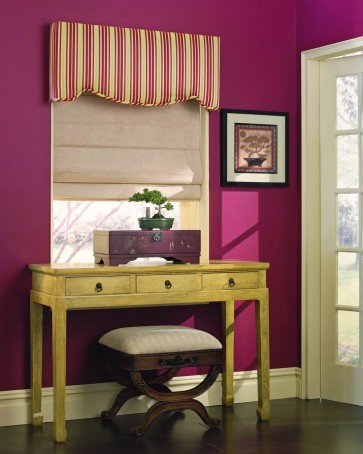
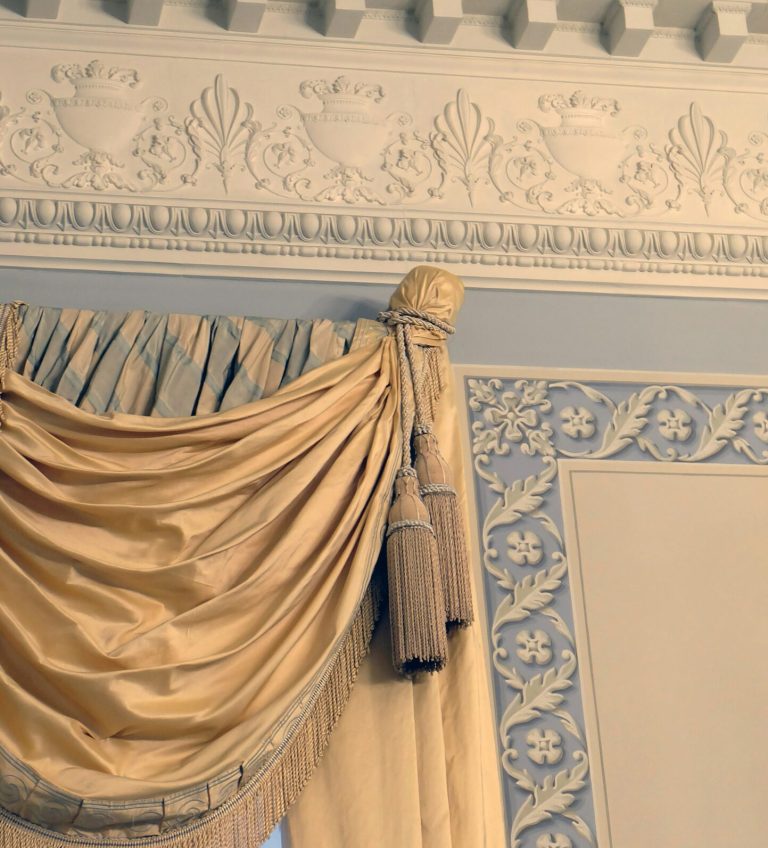
Upholstered cornice boards are custom constructed at Buy Home Blinds to fit the exact size and specifications of your windows. Available in straight, shaped or arched profiles, and upholstered in solids, textures, patterns or in coordinating fabrics with your existing drapery panels. Topped into a pair of custom curtains in a formal living room, hidden behind the headrail of a rolled roller in a home office, or layered atop a window with a Venetian blind or sheer, our cornice boards provide a designer finish guaranteed by professional installation throughout Maryland, DC, and Northern Virginia.
What Is an Upholstered Cornice Board?
An upholstered cornice board can be described as a window topper of a boxlike form, constructed out of a solid wood structure (which usually consists of a top panel or dust cap, legs or two side panels and a front face panel). Usually dacron padding is added for the inside of the frame and it is then tightly stuffed with some fabric that decorates the face of it. This creates an architectural style window treatment that hangs above a window or above the window treatment already installed on the window.
Cornice board is a non-loose or hanging board unlike soft valances or curtain headings. It has a clean, well organized front face that suggests that the window, and the room, are well designed. Cornice boards are especially useful at concealing the mechanical components of blinds and shades, at blocking light that would otherwise leak around the top of the window treatments and at creating the illusion of a taller window for an architectural look.
Cornice Board vs. Valance – What Is the Difference?
Cornice boards and valances are decorative window treatments that are both different products with different aesthetic effects.
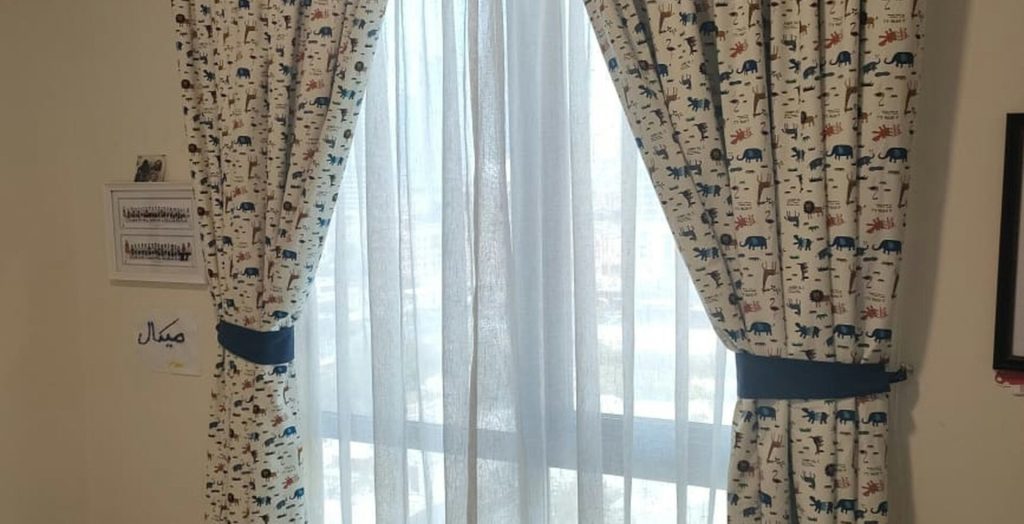
Valance is a soft fabric treatment. Whether gathered on a rod, pleated on a board, or draped across a decorative hardware piece, a valance always has freely hanging fabric at the top of the window. Valances are versatile and relatively easy to change, making them a popular choice for casual or informal spaces like kitchens, breakfast rooms, and children’s bedrooms. They are also soft enough to pair with any shape window or existing curtains or sheers.
Cornice board, on the other hand, is a structural hard board. Fabric is pulled taut on a rigid wood structure that has no hanging or draping. This makes the cornice board look sharp and defined, as opposed to a valance, which looks more casual, more soft and more temporary. Ideal window treatments for top are cornice or chandeliers, for formal living rooms, master bedrooms, dining rooms, home offices and wherever a window treatment is supposed to make a statement instead of just adding softness.
In addition, a cornice board will hide hardware better than a valance, which makes it the right choice if the blinds or shades in your room would be showing hardware if it were not covered.
Cornice Board Styles – Straight, Shaped, and Arched
Not all cornice boards are created equal. There are several ways to customize the profile of the front face panel:

Straight Cornice
The front face is cut horizontally across the entire width of the window. This is the most up-to-date and most sought-after for modern interiors, transitional and Scandinavian. Roller shades, solar shades, and cellular shades offer a geometric and linear look that complements straight cornices.
Shaped Cornice
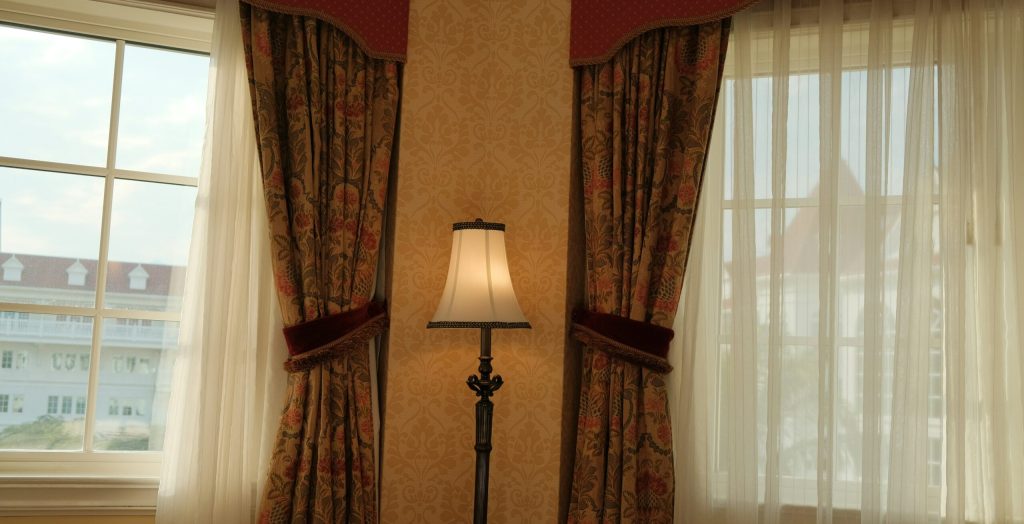
Front face decorative panel is shaped to an architectural form such as a scalloped hem, arched cutouts or angled points or a custom shape that creates a sense of interest and character. Shaped cornices look great in traditional, transitional and eclectic decor, and harmonize with coordinating or contrasting drapery panels.
Arched Cornice
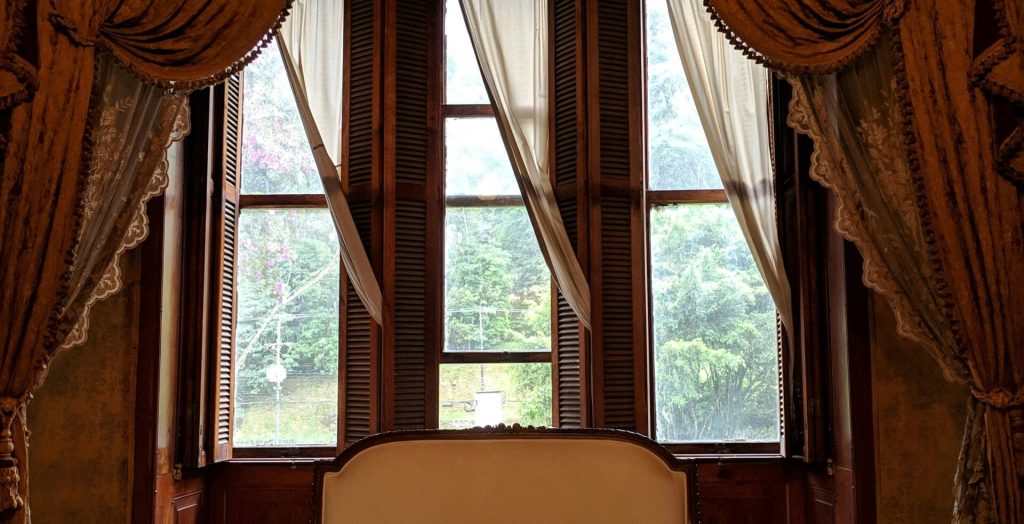
The cornice face is curved or arched at the top, creating a refined and sophisticated appearance. Arched cornices work well in formal living rooms, dining rooms or entryways where you want to create a sense of grandeur and attention to detail.

Welting & Nailhead Trim
Welting (or piping) is used down the bottom and up the top of the face panel and is either matching or contrasting. Nailhead trim is trimmed with individual nailheads around the edges for a more traditional or transitional look. Both ventures take a plain cornice board into true designer-land.
Layering Cornice Boards with Drapery Panels and Window Shades
As with so many other design choices, a cornice board can be used for a variety of creative purposes, but one of its best applications is as the anchor piece of a layered treatment, a multi-layered window covering that maximizes light control, privacy, insulation and visual impact.
Cornice Board with Drapery Panels
The most traditional double-layered combination. Behind or beneath the cornice board custom drapery panels hang on a rod which is hidden and covered up by the fabric. Cornice board & Drapery panels are available in coordinating fabric for designer consistency or contrasting fabric for great visual interest. This pair works well in formal living rooms, master bedrooms and dining rooms.
Cornice Board with Roller Shades or Solar Shades
If a straight cornice board is used above a roller shade or solar shade, the headrail is not visible and the installation looks clean and modern. The shade serves all the light and privacy needs, the cornice gives the visual finish. The combination is particularly suitable for rooms with one or several windows or when appearance consistency is required, such as in home offices.
Cornice Board with Roman Shades
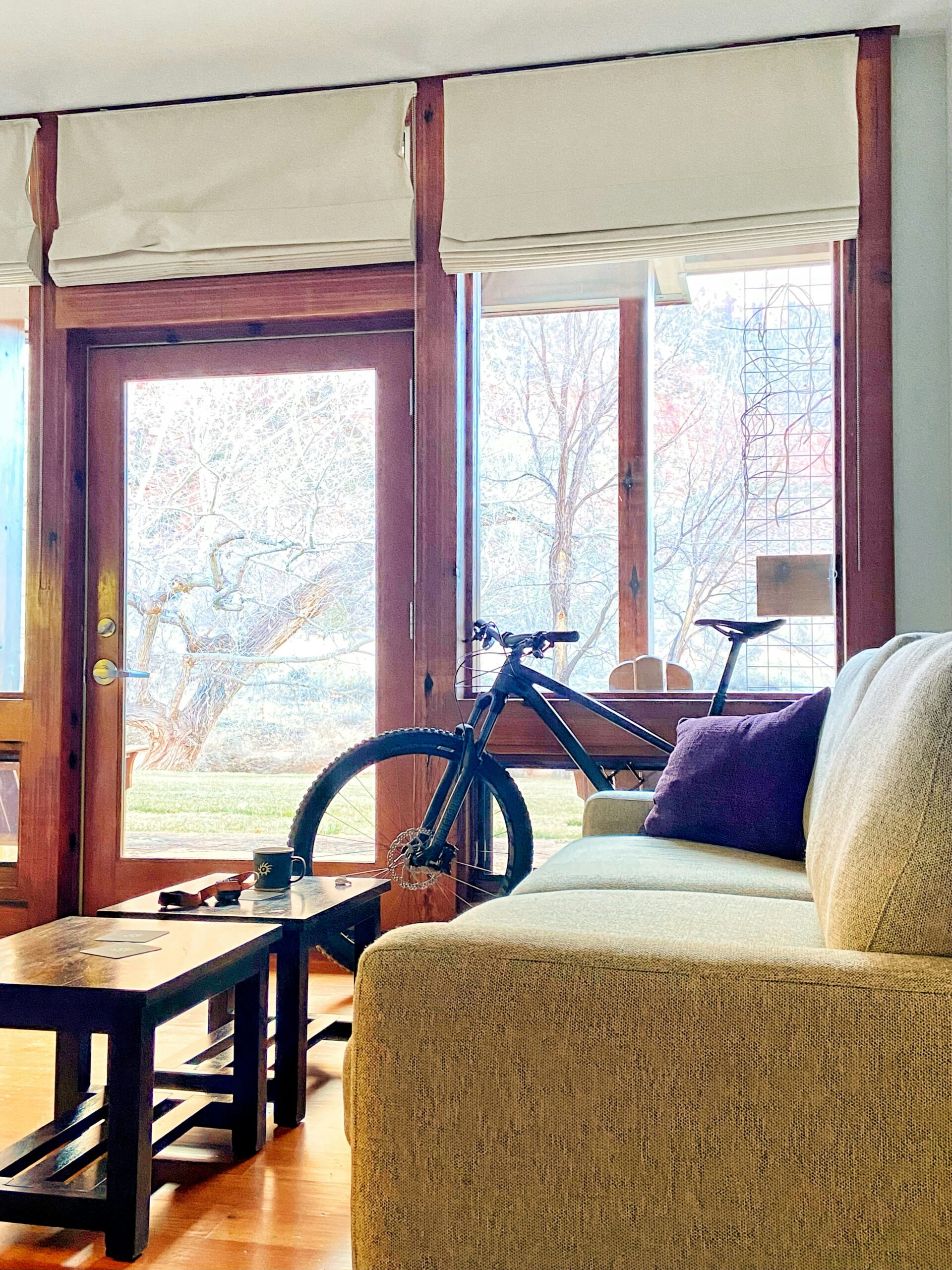
Upholstered cornice boards go well with Roman shades, as the two treatments share a similar aesthetic and romanticism with the creation of custom fabric accents. The cornice sits above the roman shade, hiding the shade hardware and finishing the window in an intentional manner from top to bottom. When coordinating cornice fabric with the roman shade fabric, it will produce a built-in look.
Cornice Board with Cellular Shades
If energy saving is the most important consideration, then the cornice board is used for decoration, but the cellular shade acts as insulation and filters the light. Because the cornice board is placed on top of the cellular shades, it also closes the light gap that can be seen at the top of the shade, which is another practical advantage besides its beauty.
Choosing the Right Fabric for Your Cornice Board
Choosing the fabric is the most critical decision when creating an upholstered cornice board because the fabric dictates the cornice’s connection to the remaining furnishings in the room.
If your drapes complement your existing fabrics, it’s best to match or coordinate your fabric selection to create a unified and integrated appearance. For a layered, more intentional designer look, opt for a fabric that changes in pattern or texture, but stays in the same color family as the rest of the room.
Medium-to-heavy upholstery-weight fabrics, such as linen blends, cotton twills, woven textures and performance fabrics are the best on a cornice board in terms of weight and texture; they stretch, upkeep, and clean easily. Draperies come in a variety of weight options too, even relatively lightweight ones, but which we do as standard with correct lining and padding.
Ask for free samples of fabrics before deciding. When you see and feel the fabric in the light that you choose and with your existing furnishings, it makes all the difference.
Request Free Fabric Samples at buyhomeblinds.com/samples
Room-by-Room Guide – Where Cornice Boards Work Best

Living Room
Upholstered cornice boards are a natural fit in the formal living room. When used with floor-length drapery panels in the same fabric, a straight or shaped cornice board with welding detail makes for a designer quality window treatment that helps ground the room and raise the whole space. For a finished and cohesive room, apply the same cornice profile throughout the room for all of the windows.
Master Bedroom
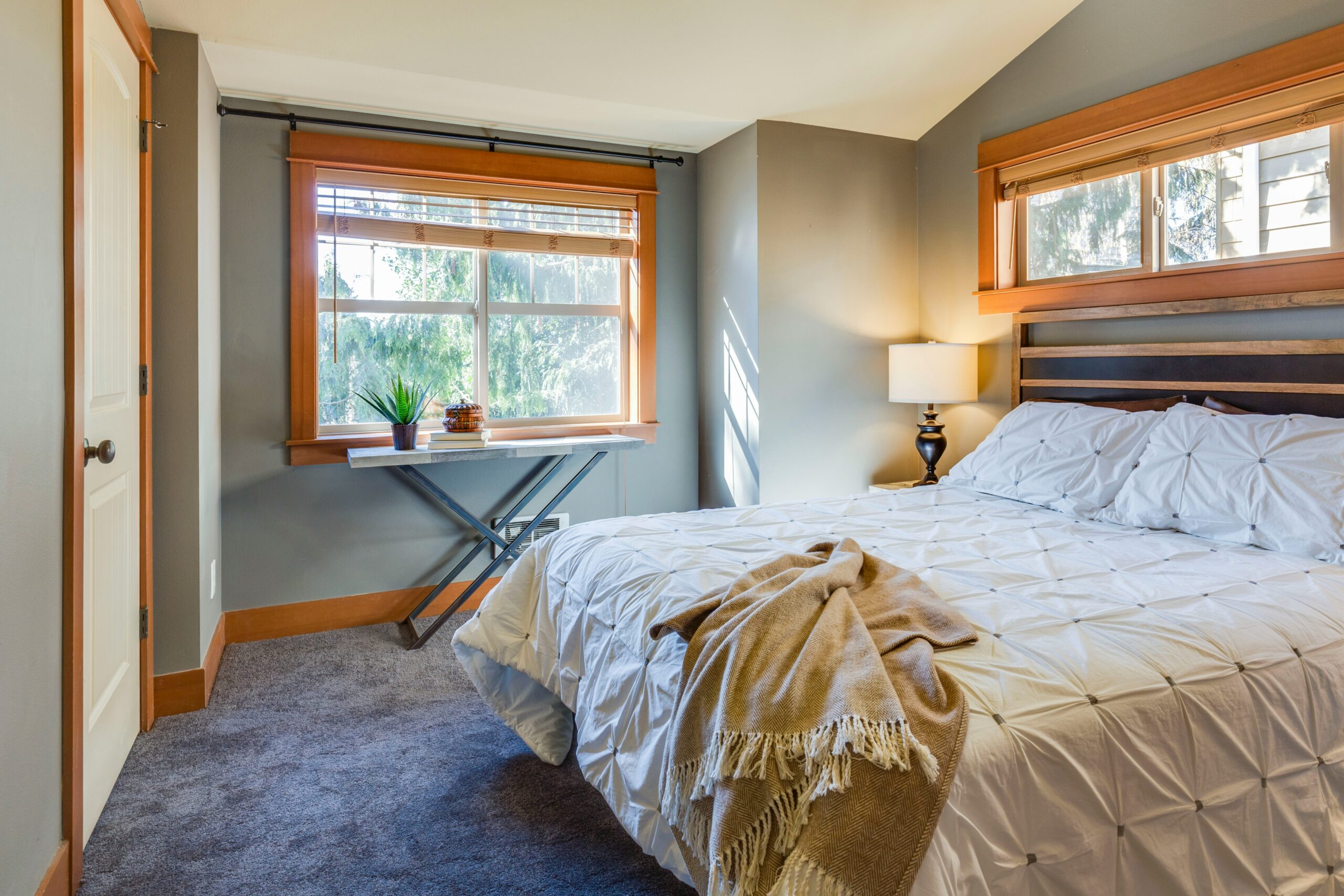
Hanging an upholstered cornice board above blackout drapery panels or over a room-darkening cellular shade adds a finished touch to the master bedroom, and it's also a very practical way to completely block the light out of the room at the top of the window. Offer a shaped or arched cornice profile with nailhead trim to bring a decorative touch that is level with the expectations of the room in the home.
Dining Room
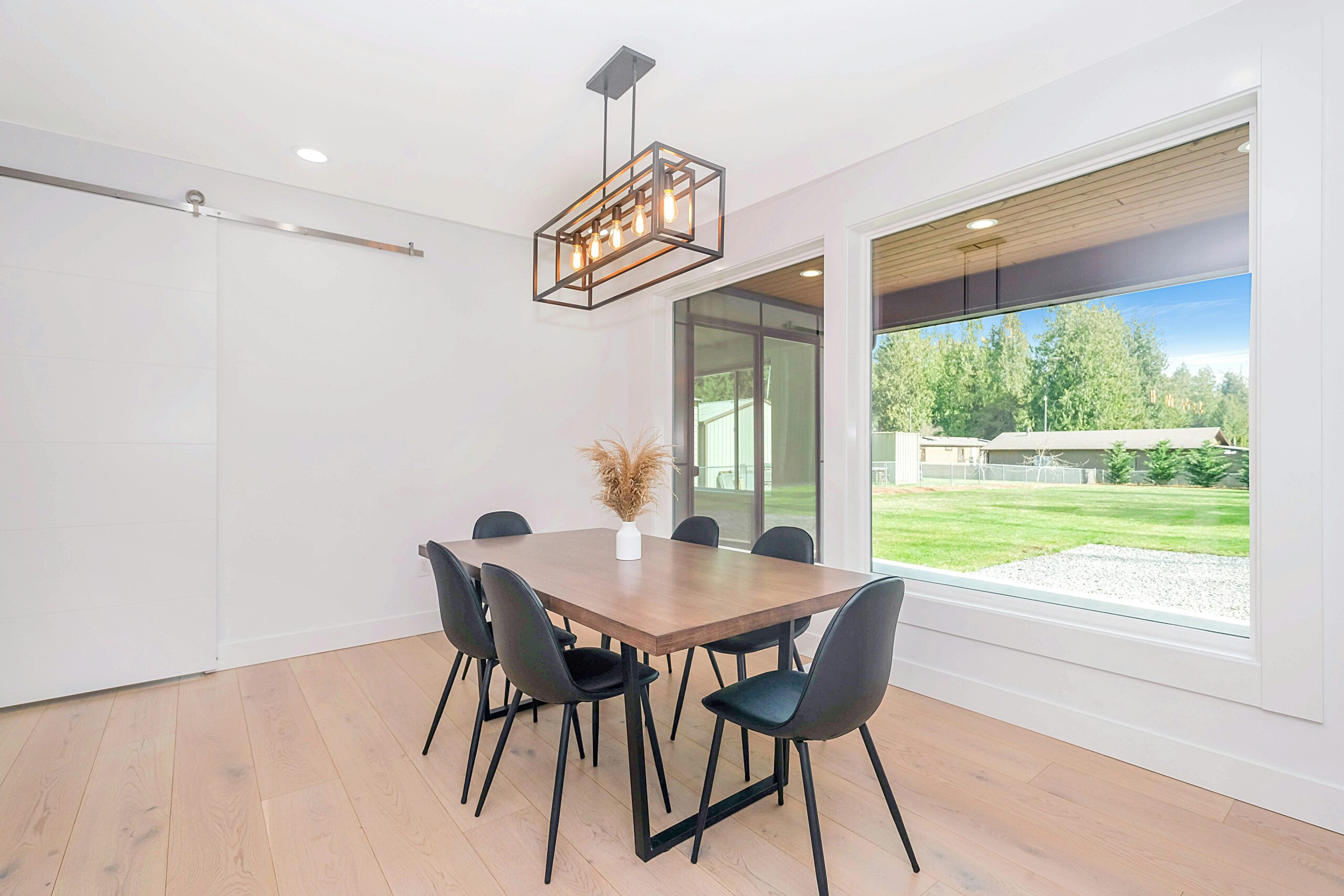
A cornice board adds a sense of formality and structure to dining rooms. A shaped cornice in a rich texture (velvet, linen blend or woven jacquard) combined with panels of draperies in matching or patterned fabric adds an element of occasion and refinement that soft valances simply do not offer.
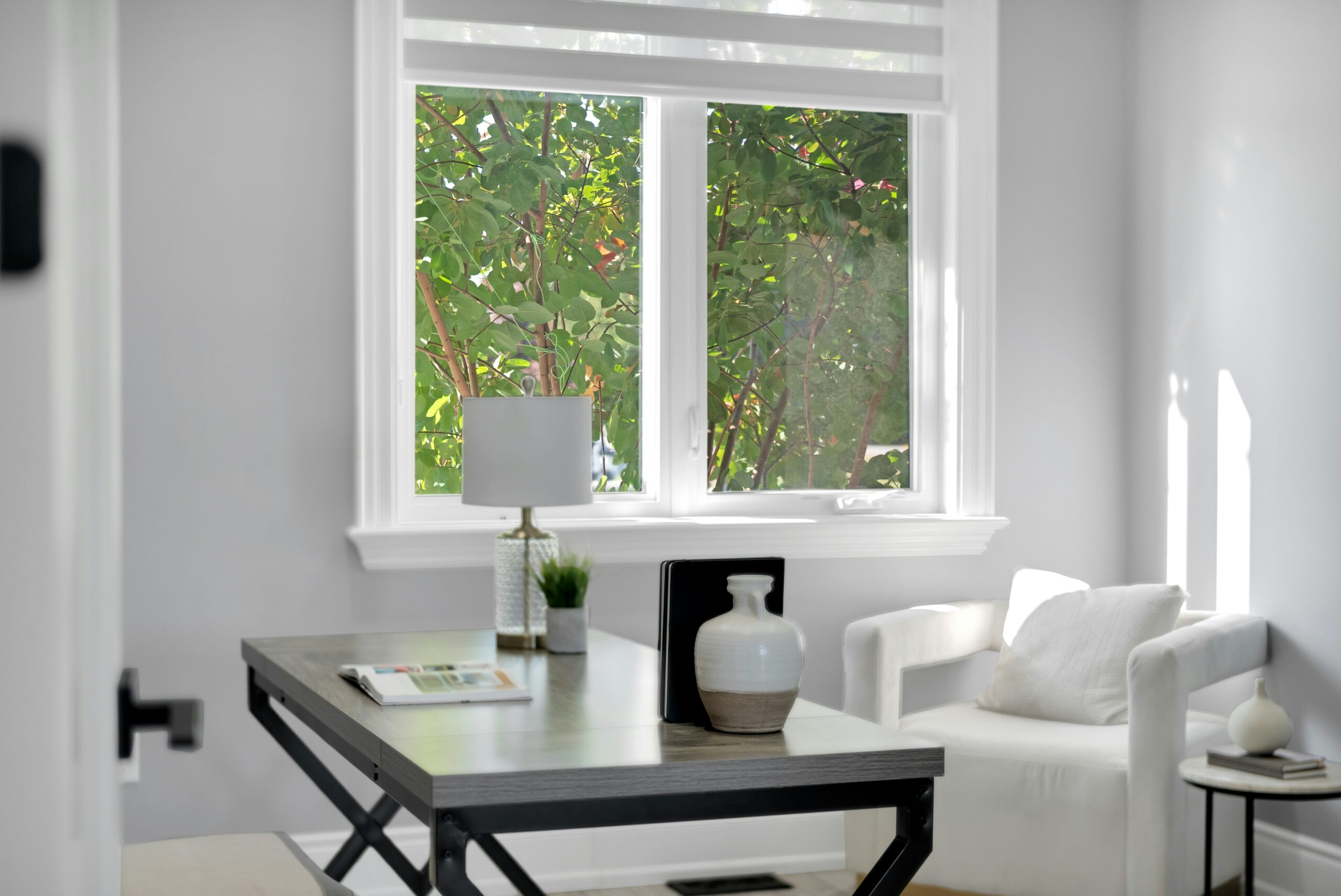
Home Office
When a home office is above a roller shade or solar shade, an unadorned cornice board will provide a modern and organized look. All hardware is out of view, the window is proportioned and the shade offers useful light control for screen time. A neutral fabric in the cornice helps to focus and doesn't distract the space.
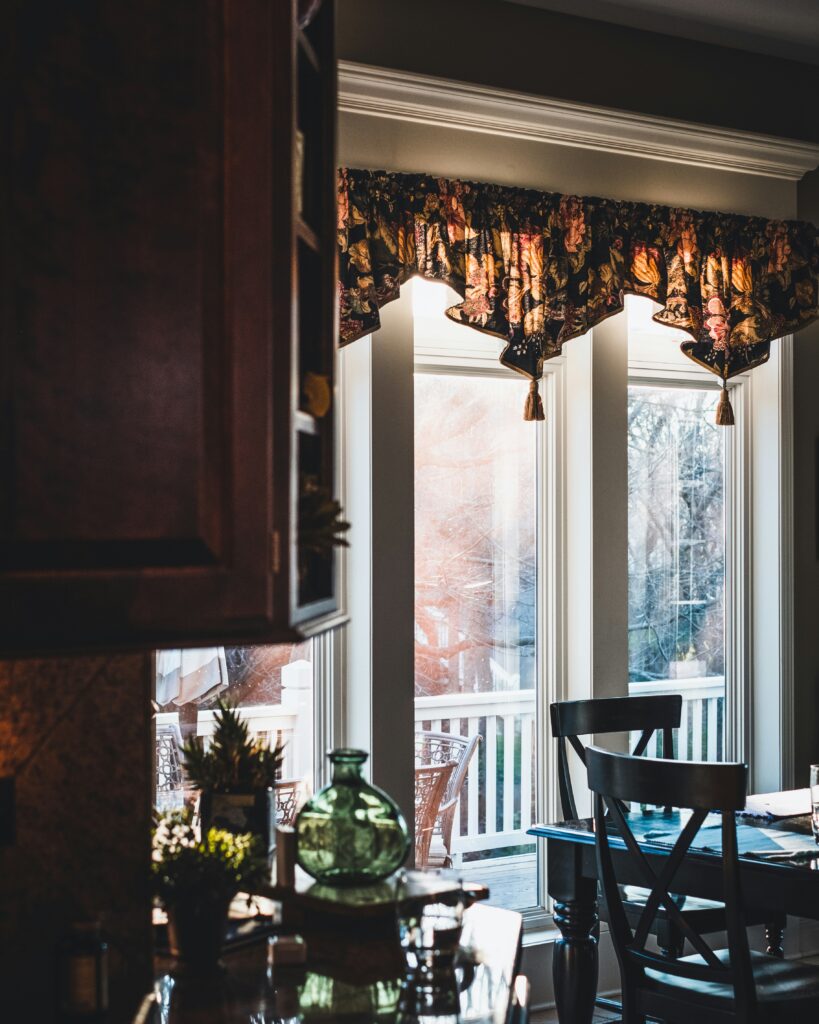
Sizing and Proportion for Cornice Boards
Proportions are crucial to a cornice board, just as the fabric. An undersized cornice appears like an after thought. If it takes up too much of the window, it will be too large.
In most instances, the cornice board should be about 1/5 of the overall height of the window treatment, which is the height of the cornice board plus the height of the window panels or shades on which the treatment hangs below. A cornice board that is 9 to 12 inches high is typically correct for a standard ceiling of 8 ft and floor length drapery panels.
When installing a cornice board on the outside, it should be 2 to 4 inches wider on each side of the window frame, covering the window frame completely and any light gaps at the window edges. The larger the window or if wide panels of draperies are installed, a longer extension might be necessary.
When installing a shade headrail, the cornice board should be deep enough to accommodate all operating hardware behind it (usually 3 to 5 inches, and 4 to 6 inches for drapery panels covered with a rod or track).
A professional measurement and proportion recommendation is included as a free bonus with our in-home consultation. Please contact us prior to ordering if there is any sizing questions.
Ready to Give Your Windows a Finished, Architectural Look?
Buy Home Blinds custom upholster cornice board changes any window treatment into a fully designed window treatment. From fabric selection to final installation, our local Maryland team can guide you through every decision, whether it’s pairing a cornice board with custom drapery panels in your living room or mounting one above the roller shade in your home office, or creating a layered bedroom window treatment with coordinating fabric throughout
Frequently Asked Questions About Upholstered Cornice Board
Q1: What is an upholstered cornice board?
Upholstered cornice board is a four-sided window topper with a solid wood frame and a face fabric that’s padded with dacron batting. A cornice board is a solid flat front face, which creates a plain, architectural look, as opposed to soft or hanging valances. It hangs over a window to cover open spaces in windows, to hide the working parts and to give windows a finished and designer appearance.
Q2: What is the difference between a cornice board and a valance?
A valance is a fabric, soft top to the window, without a framed structure. A cornice board is a flat, boxy shape with tightly stretched fabric over a wooden framework, yielding a crisp, structured look. Valances are ideal for casual, informal rooms, and more easily changeable. Cornice boards are appropriate in a formal room, on a large window or when you need a more durable, architectural finish. Cornice boards are also good at hiding hardware and stopping light gaps as compared to most valence designs.
Q3: What styles of cornice boards are available?
Straight, shaped and arched cornice board profiles are available. Straight cornices have a clean horizontal front edge ideal for contemporary and transitional interiors. Decorative shaped cornices are the cutouts, scallops or angled profile shapes that look best in traditional and eclectic rooms. Arched cornices feature rounded upper edges that lend formality and beauty. These are all finishable with welting (piping) trim or nailhead trim for extra designer flair.
Q4: Can a cornice board be paired with drapery panels?
Yes – the cornice board window treatment and drapes are one of the most popular and effective window treatment pairings. The cornice board hides the drapery rod and any hardware and encases the upper part of the window in an architectural frame. The cornice board and drapery panels may be created within coordinating or contrasting fabrics for an intentional and layered design effect.
Q5: Can cornice boards be used over blinds and shades?
Yes. Cornice boards are commonly installed above roller shades, solar shades, roman shades, and cellular shades. The cornice board conceals the headrail and mounting hardware, eliminates the light gap at the top of the shade, and gives the overall window treatment a finished, professional appearance. This combination delivers both practical light control from the shade and decorative finish from the cornice board.
Q6: How do I choose the right fabric for an upholstered cornice board?
To match the colours for an integrated effect, select a fabric that blends with the other drapery panels, shades or upholstered furniture found in the room. Pick a fabric with a pattern or texture that is different from the first, but within the same color family for a layered cloth design. Upholstery most commonly is made from medium to heavy upholstery weight fabrics such as linen blends, cotton twills, woven textures, which hold shape and clean best. If you aren’t sure, it’s best to ask for free samples of fabric to see how it looks in your space and with your existing textiles.
Q7: How wide and tall should a cornice board be?
In general proportion, the cornice board’s size should be 1/5 window treatment size. Cornice boards will generally be 9 to 12 inches tall for standard ceiling heights (8 ft) and floor-length curtains or shades. The width should be about 2-4 inches wider than the window frame on each side. The depth should be enough to accommodate all the operating hardware behind it; usually 3 to 6 inches depending on the item being covered. All of our free in-home consultations include a professional proportion recommendation.
Q8: Do you offer professional installation for cornice boards in Maryland, DC, and Virginia?
Yes. Professional installation is offered throughout our entire service area—Maryland, Washington DC and Northern Virginia. Cornice boards are also hard to install and heavy, making professional installation advisable because they must be precisely measured and anchored to the walls and must be set level. We have a staff of people on our team who can measure, fabricate, and install. Call us at (301) 847-7000 to schedule installation for your order.